
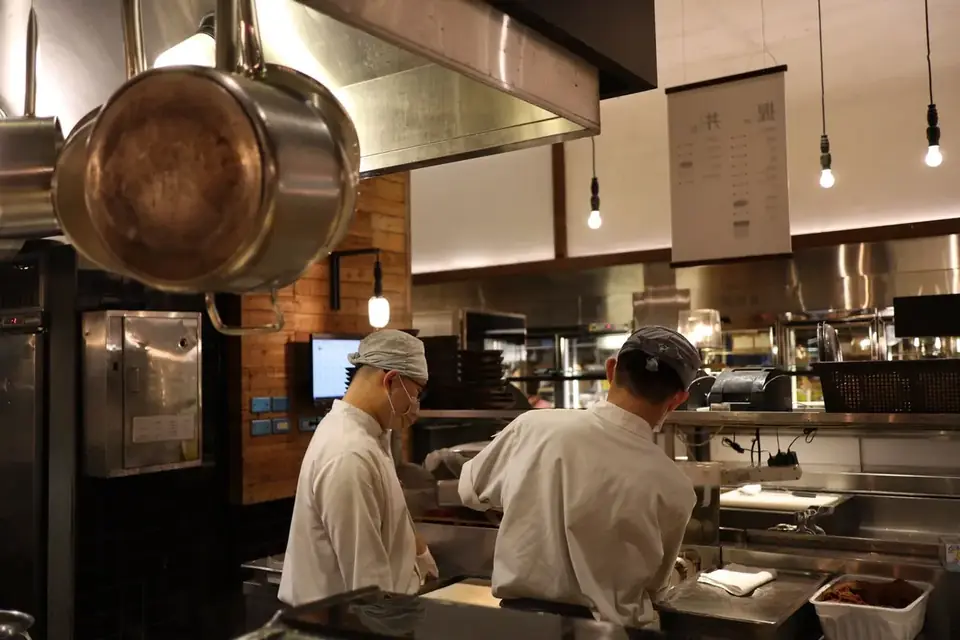
In short: NSW is phasing in mandatory food-waste separation for relevant businesses and institutions. The first stage began on 1 July 2026. Your start date depends on the type of premises, weekly general-waste bin capacity and any applicable exemption. Use the official NSW EPA calculator to check your site.
Who needs to check the rules?
The rollout covers specified premises, including supermarkets, restaurants, cafés, takeaway outlets, hotels, clubs, common food courts and some education, healthcare and care facilities. Selling or handling food does not mean every site has the same deadline. Check the premises category and exemptions in the EPA’s mandate overview.
When does your business need to act?
The EPA lists these weekly general-waste capacity thresholds. They are bin-based tests, not the weight of food scraps produced:
1 July 2026 — first stage already in effect
- Six or more 660-litre bins; or
- 16 or more 240-litre bins; or
- A combination of bins totalling at least 3,960 litres.
1 July 2028 — next stage
- Three or more 660-litre bins; or
- Eight or more 240-litre bins; or
- A combination totalling at least 1,980 litres.
1 July 2030 — further rollout
- One or more 660-litre bins; or
- Three or more 240-litre bins; or
- A combination totalling at least 720 litres.
These are the EPA’s published alternatives. Check your collection arrangements in the official calculator rather than relying on a rounded litre estimate. Commercially serviced residential accommodation has specific timing rules.
Check exemptions before making assumptions
The EPA has time-limited exemptions. These include specified regional areas, some public institutions and certain on-site processing arrangements. A front-of-house exemption currently runs to 1 July 2030 for qualifying customer dining areas. It does not remove applicable back-of-house separation requirements.
Review the conditions and dates on the EPA exemptions page. A business should not assume that limited space or an existing contract gives it an exemption.
What does a compliant service generally involve?
Unless an applicable exemption changes the requirement, affected premises need enough bins for their food organics, separate transport from non-organic waste, and collection at least weekly. The EPA’s business-mandate guidance explains these requirements and responsibilities where a property owner or facilities manager controls the waste contract.
A practical checklist for your site
- Map the current service. Gather bin sizes, collection schedules, invoices and the names of people responsible for the waste contract.
- Look at the work areas. Identify where food scraps arise and how staff move them to the collection point. A waste audit can help establish a useful baseline.
- Confirm the organics service. Discuss suitable bins, access and collection arrangements with your provider. Ask where material is processed and which liners or materials the service accepts.
- Make sorting straightforward. Use clear labels, convenient bin locations and short instructions for staff, cleaners and tenants.
- Review the overall cost. Compare organics costs alongside general-waste capacity and collection frequency. Avoid assuming that a new service automatically creates savings.
- Keep checking. Assign someone to review contamination, missed collections, invoices and service records.
A separate requirement for large supermarkets
Large supermarkets also have food-donation record-keeping duties from 1 July 2026. These are separate from arranging organics collections. Check the definition and requirements in the EPA supermarket record-keeping guide.
Frequently asked questions
Does every NSW business have to start in 2026?
No. The applicable date depends on the premises category, weekly general-waste capacity and exemptions. Check your site using the official EPA calculator and current guidance.
Does a food bin mean food and garden waste must be mixed?
No. Food organics (FO) and combined food and garden organics (FOGO) are different service arrangements. Confirm which service your contractor provides and what it accepts.
Can Future Waste help organise a service?
Future Waste can help review your existing arrangements, assess food and organics collection options and coordinate providers. For a practical example of service changes, read our shopping-centre food-waste case study.
Government guidance checked on 12 November 2026. This article is a practical overview. Confirm your site’s obligations and any exemption against the current NSW EPA guidance or with the relevant regulator.